Bitcoin for Beginners: Why Sovereign Individuals Hold Hard Money
Bitcoin isn't an investment. It's a tool for financial sovereignty — a way to hold value outside the system that's been quietly draining yours.
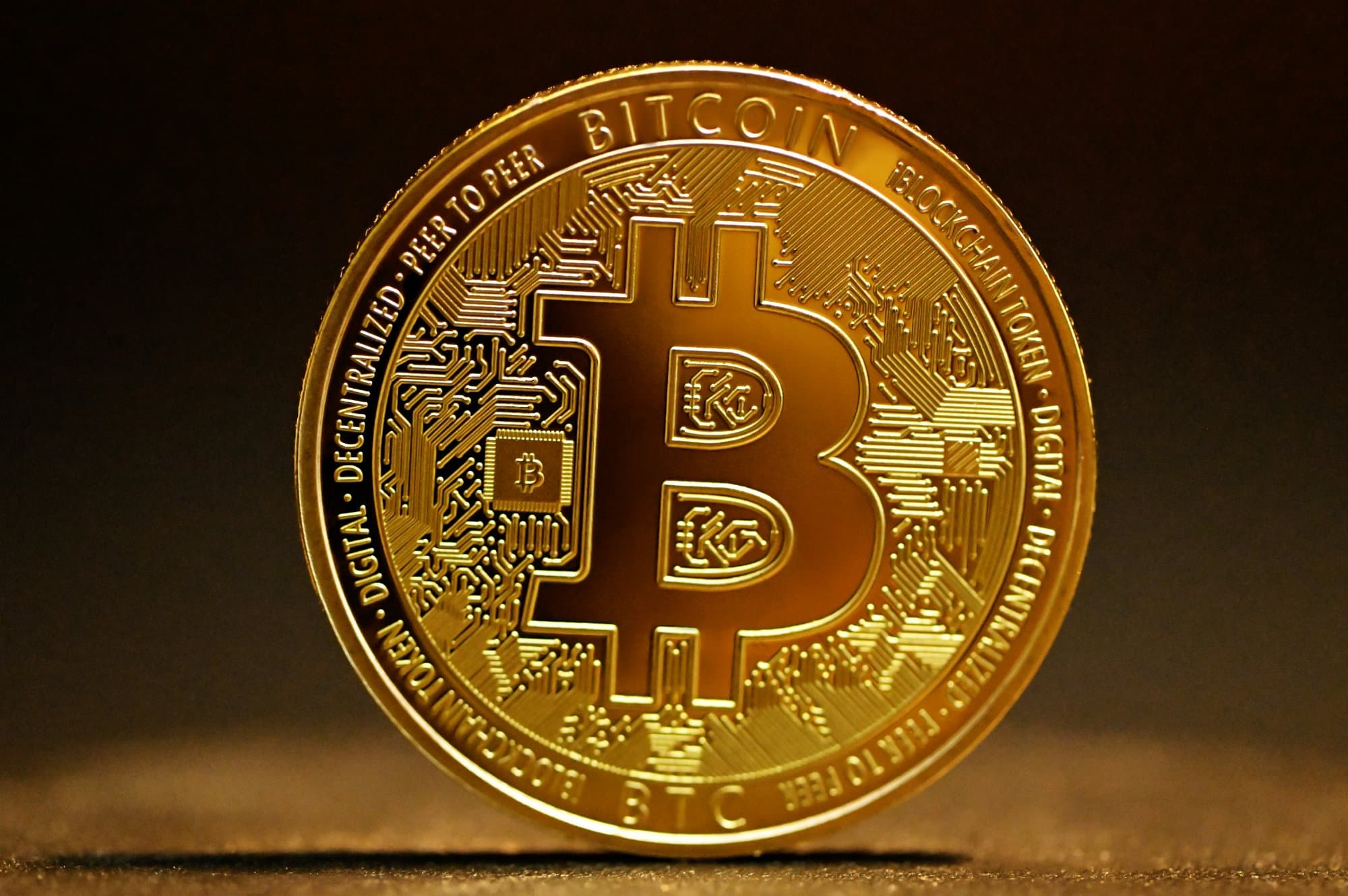
Photo by Kanchanara
Let's start with the honest version of what's happening to your money.
Every dollar sitting in your bank account is losing value right now. Not because of anything you did wrong — because that's how the system is designed. Central banks create new money continuously. More money chasing the same amount of goods means each dollar buys less. The official inflation numbers undercount it. Your rent, your groceries, your medical bills — you already know the real number. (For the parallel mechanism on the borrowing side — how the same system uses debt to extract your future labor — see The Debt Trap.)
This isn't a conspiracy. It's publicly documented policy. And for most of history, there was no practical escape hatch. You could buy gold, buy land, buy assets — but all of those came with friction, counterparty risk, and barriers to entry.
Bitcoin changed that equation. For the first time in human history, anyone with a phone and an internet connection can hold a form of money that no government can inflate, no bank can freeze, and no one can confiscate without your cooperation.
That's a profound thing. Let's understand how it works.
What Bitcoin Actually Is
Bitcoin is a decentralized digital currency — meaning it runs on a network of computers around the world with no central authority controlling it. No CEO, no headquarters, no government backing it. It exists as software and mathematics.
The key innovation is called the blockchain — a public ledger that records every Bitcoin transaction ever made. This ledger is maintained simultaneously by thousands of computers (called nodes) around the world. To change or corrupt it, you'd need to control more than half of all that computing power simultaneously. In practice, this is economically impossible.
What makes Bitcoin different from every other currency:
Fixed supply. There will only ever be 21 million Bitcoin. Ever. This is enforced by the code itself, not by a promise from an institution. No government can decree more Bitcoin into existence. No central bank can "print" it.
No counterparty. When you hold Bitcoin in your own wallet, you hold it directly — like physical cash, but without the physical. There's no bank that can freeze your account, no payment processor that can decide your politics are wrong, no institution standing between you and your money.
Permissionless. You don't need to ask anyone's permission to receive or send Bitcoin. No credit check, no ID verification required at the protocol level. Open to every human on earth equally.
The Sovereignty Case for Bitcoin
There's a difference between using Bitcoin as a speculation and holding Bitcoin as a sovereignty tool. The speculation mindset is watching the price and trying to time the market. The sovereignty mindset is asking: what is this for, and does it serve my freedom?
Here's the sovereignty case:
Inflation resistance. The dollar has lost roughly 97% of its purchasing power since the Federal Reserve was created in 1913. Bitcoin's fixed supply means this can't happen. Over time — not in a straight line, but over time — Bitcoin has preserved and grown purchasing power while fiat currencies have decayed.
Censorship resistance. In 2019, Lebanese banks froze depositors out of their own savings — ordinary people who had done nothing wrong, locked out of money they had earned over a lifetime. In 2013, Cyprus took a portion of large bank deposits outright to fund a bailout. In 2021, banks in Nigeria blocked accounts tied to protest movements. If you hold Bitcoin in self-custody, none of these institutions can touch it. The transaction goes through as long as the network exists.
Portability. You can memorize twelve words — a "seed phrase" — and walk across any border in the world with your entire net worth in your head. Try that with gold bars or a brokerage account.
Transparency and verifiability. You don't have to trust Bitcoin. You can verify it. The code is open source. Anyone can audit it. The supply is publicly visible. This is the opposite of a central bank, where monetary policy is made behind closed doors.
How to Start: The Right Way
Most people's first Bitcoin experience is wrong. They buy it on an exchange and leave it there. That's not sovereignty — that's just trading one intermediary for another.
The sovereign approach has three steps:
Step 1: Understand Before You Buy
Don't put a dollar into Bitcoin until you understand what you're doing. Spend a week reading. Understand the seed phrase. Understand that if you lose your seed phrase and your device, the Bitcoin is gone forever. There's no "forgot my password" for self-custody.
Good starting resources: The Bitcoin Standard by Saifedean Ammous (the philosophical/economic case), Inventing Bitcoin by Yan Pritzker (the technical case, written for non-engineers), and the Bitcoin whitepaper itself (only 9 pages).
Step 2: Get a Hardware Wallet
A hardware wallet is a physical device that stores your Bitcoin's private keys offline — disconnected from the internet and unhackable remotely. (Self-custody is just one slice of a broader privacy tool stack — browser, email, VPN, messaging — that every sovereign individual should have in place.) The two most respected options are Coldcard (maximum sovereignty, sovereignty-focused design) and Trezor (more user-friendly, open-source firmware).
This is the step most people skip because it costs $50–$150. Don't skip it if you're holding meaningful amounts.
Step 3: Buy from a Privacy-Respecting Source
Most major exchanges require extensive ID verification (KYC — Know Your Customer), which creates a government-accessible record of your holdings. That's your call to make, but understand the tradeoff.
For those prioritizing privacy: Bisq is a decentralized, peer-to-peer exchange that requires no ID. RoboSats operates over the Lightning Network with strong privacy defaults. Bitcoin ATMs vary widely — some require ID, some don't.
For those starting simply: Strike and Swan Bitcoin are reputable, lower-fee options that do require KYC.
The Things People Get Wrong
"Bitcoin is too volatile to be real money."
Bitcoin is volatile in the short term. As of early 2026, every four-year window in its history has closed positive. The volatility is the price of early adoption — you're getting in early on something that's still being priced by the market. As adoption grows, volatility decreases. Gold was also volatile when it was being remonetized.
"Bitcoin will be replaced by something better."
Bitcoin has network effects that are essentially impossible to replicate at this point. The entire value proposition is trustlessness and decentralization — and those properties require the network effect, the mining infrastructure, and the fourteen years of unbroken uptime that Bitcoin has. Newer cryptocurrencies trade those properties for features. That's not an upgrade for a store of value.
"The government will ban it."
Governments can and do regulate exchanges, and that regulation is real — plan around it. But they can't ban the protocol itself without banning the internet. A government can make Bitcoin harder to buy and harder to convert back. It cannot stop the network from producing blocks, and it cannot reach into a self-custody wallet.
"I missed it — it's too expensive."
One Bitcoin is divisible to eight decimal places. The smallest unit (a satoshi) is 0.00000001 BTC. You can buy $20 worth. The price per unit is irrelevant — what matters is the percentage of the supply you hold.
A Note on Other Cryptocurrencies
There are thousands of cryptocurrencies. Most of them are either experiments, speculation vehicles, or outright scams. The sovereignty case applies specifically to Bitcoin because of its fixed supply, decentralization, and the absence of any controlling entity.
Other cryptocurrencies — including Ethereum — have made different tradeoffs. Ethereum has a controlling foundation, an unlimited supply (though with a burn mechanism), and a history of arbitrary protocol changes. These tradeoffs may be fine for other purposes, but they undermine the core sovereignty properties.
For the purpose of preserving wealth outside the system, Bitcoin is the only option that has stood the test of time.
How Much to Hold
There's no universal answer, but here's a sovereignty framework: hold enough that your financial situation would be meaningfully improved if Bitcoin reaches mainstream adoption, and not so much that volatility would destabilize your life in the short term.
For most people starting from zero, that means building a position over time through regular purchases — a practice called dollar-cost averaging (DCA). Buy the same dollar amount weekly or monthly regardless of price. (And if you don't have margin to spare yet, your second income is your first act of freedom — building one is the prerequisite to building a stack.) Over time, you average out the volatility.
The sovereign goal isn't to get rich. It's to hold a portion of your wealth in an asset that can't be inflated away, can't be frozen, and can't be confiscated — because those properties matter, and you may need them to matter before you expect to.
The Bigger Picture
Bitcoin is one tool in a larger toolkit. It doesn't replace land, community, skills, or physical preparedness. A sovereign life is built on many foundations.
But as a financial instrument for the sovereign individual — as a way to store value outside a system that is structurally designed to transfer wealth from savers to institutions — nothing else does what Bitcoin does.
You don't have to move your whole life into it. You just have to understand it well enough to make your own decision.
That's all sovereignty has ever asked of you.
Nothing in this article constitutes financial advice. Do your own research. Hold only what you can afford to hold through significant price swings.
Continue Your Sovereignty Journey
Get weekly dispatches on financial sovereignty and the other pillars of sovereignty — or create a free account to access courses, community, and tools.
Don't miss the next one
Weekly articles on financial sovereignty and the other five pillars of sovereignty. No spam. Unsubscribe anytime.
No spam. Unsubscribe anytime. Your data stays yours.