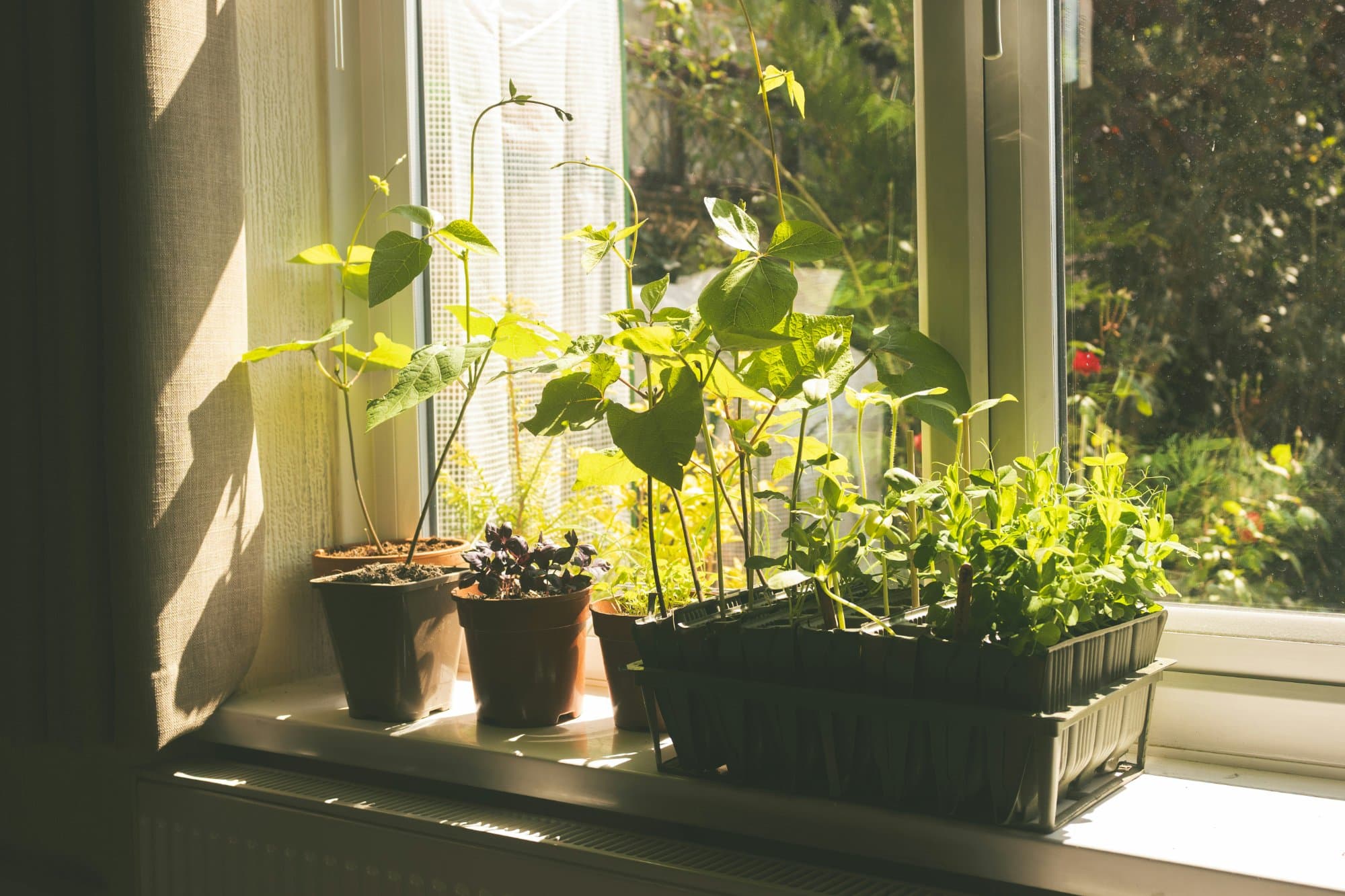
Growing Food Is the Easy Half
Anyone can grow a tomato. Keeping it through February is the skill that actually makes you self-sufficient — and none of the four oldest methods need electricity.
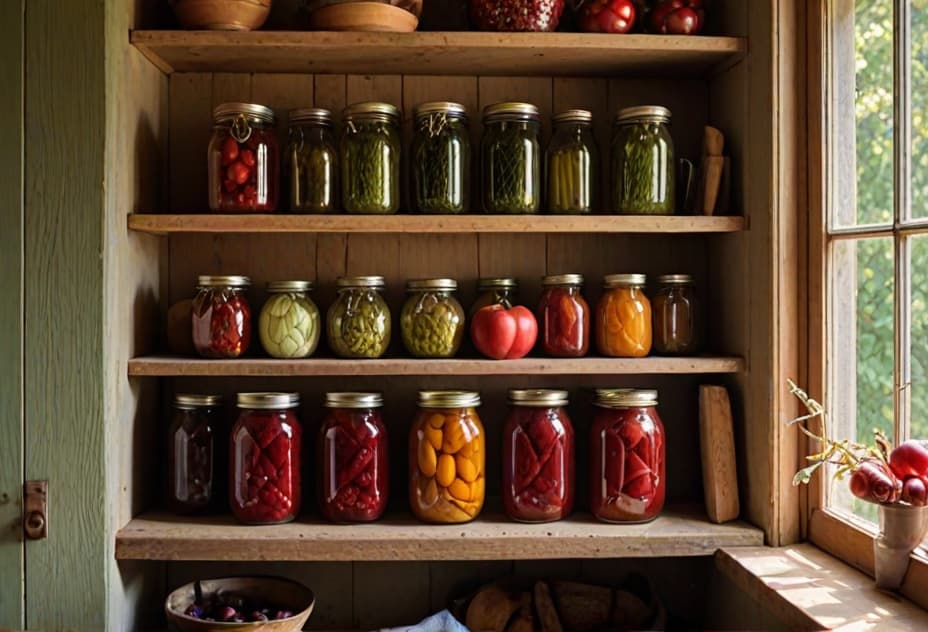
Growing food is the easy half
There is a particular grief that finds every new grower in late summer.
You did everything right. The seeds took. The tomatoes came in heavy, all at once, the way tomatoes do — forty pounds in eleven days. You gave some to neighbours. You ate them until you were tired of them. And then you stood at the counter and watched the rest go soft, and something in you understood that you had solved the wrong problem.
Growing food is a season. Keeping food is a year.
This is the part the beginner guides skip, and skipping it is what makes self-sufficiency feel like a fantasy for people with land. It isn't. The four methods below are older than refrigeration, older than the grid, older than the supply chain you're trying to step out from under. Three of them need no electricity at all. None of them need acreage.
If you have not started growing yet, start there — Getting Started with Homesteading: No Land Required is the doorway. This is the room on the other side of it.
Why this is a sovereignty practice and not a hobby
A pantry you filled yourself changes your relationship to the calendar.
Most of us live on a three-day buffer. Not by choice — by design. The system is optimised so that food arrives just in time, which is another way of saying it arrives only just in time. That works beautifully right up until it doesn't, and the household with a shelf of jars is not panicking on the day the household without one is.
But the reason to do this isn't the bad day. That's the fear-sell, and it's beneath you.
The real reason is quieter: a full pantry is stored decision-making. It is a hundred small future choices you have already made and paid for, in a season when you had abundance and time. Winter-you does not have to negotiate with a supermarket at 6pm on a Tuesday. Winter-you opens a jar. That is what sovereignty actually feels like day to day — not dramatic independence, just a narrowing of the number of things that get to decide for you.
The four methods, honestly
1. Fermenting — the one to start with
Salt, water, vegetables, a jar. That is the entire equipment list.
Lacto-fermentation works because the salt brine kills what would rot the food while leaving the Lactobacillus alive to acidify it. The vegetables preserve themselves. You are not sterilising anything; you are choosing which microbes win.
Start with: cabbage. Shred it, weigh it, add 2% of that weight in salt, squeeze until it releases its own brine, pack it under the liquid, keep it there. Two weeks at room temperature.
Why start here: it is the most forgiving method, it needs no heat and no special hardware, and it increases the nutrition of the food rather than reducing it. It also fails loudly rather than quietly — a bad ferment smells unmistakably wrong. You are never in doubt.
Keeps: months in a cold spot, longer in a fridge.
2. Water-bath canning — for anything already acidic
This is the shelf-stable one, and it is where most of your tomatoes should go.
You pack food into jars, submerge them in boiling water long enough to drive the air out, and the cooling lid pulls down into a seal. Done properly, it sits on a shelf for a year at room temperature.
The honest constraint, and it is not optional: water-bath canning is safe only for high-acid foods — most fruit, pickles, jams, and tomatoes with added acid. Low-acid foods (beans, corn, carrots, meat, plain vegetables) require a pressure canner, because Clostridium botulinum survives boiling water and does not announce itself. It does not smell wrong. It does not look wrong.
This is the one place in self-sufficiency where intuition is not a guide and a tested recipe is. Use a current tested source — a National Center for Home Food Preservation recipe, or a modern edition of the Ball book. Not a family recipe from 1962, and not this article. I am telling you the shape of the thing; the times and acidities come from people who tested them.
Keeps: about a year, room temperature, no power.
3. Drying — the oldest one, and the cheapest
Remove the water and almost nothing can grow. Herbs, chilies, apples, mushrooms, beans, tomatoes.
You need moving air and low heat. A dehydrator is convenient. A warm room with good airflow works. A car in summer works better than people expect. The test is brittleness for herbs, leatheriness for fruit — and the failure mode is storing something not quite dry, which moulds in the jar. When in doubt, another few hours.
Why it earns its place: dried food is light, stacks small, needs no jars, and survives being moved. It is the only one of the four you can carry.
Keeps: a year or more in an airtight jar away from light.
4. Cold storage — the one you already have and aren't using
Some food wants nothing done to it. Potatoes, carrots, beets, cabbage, winter squash, onions and apples will keep for months if you give them the right dark, cool, humid corner.
You do not need a root cellar. You need a spot that stays cold and doesn't freeze — an unheated stairwell, a north-facing closet against an outside wall, a garage corner, a bin of damp sand on a cold floor. Two rules that cover most failures: keep apples away from everything else (they give off ethylene and will sprout your potatoes), and keep onions and potatoes apart from each other.
Keeps: two to six months, depending on the crop and the corner. Cost: nothing.
What actually goes wrong
Not spoilage. Ambition.
The pattern is always the same. Someone reads an article like this one, buys a pressure canner and a dehydrator and a fermentation crock in the same week, does an enormous weekend, and never does it again. The equipment goes in the basement next to the bread machine.
Preserving is a habit, not a project. The households that keep doing it are the ones that made it small and repeatable — a jar or two on an ordinary evening, the way you'd wash up. Not a harvest festival.
Start with the smallest version. One cabbage.
One step this week
Pick the thing you already buy most often and lose most often to the bin. For most people it is herbs, or greens, or half an onion.
Preserve one jar of it. Not a shelf. One jar. Shred a cabbage with salt, or dry the parsley you were going to let go slimy in the drawer.
Then put it where you will see it.
The jar is not really about the food. It is the first physical evidence that the gap between depending on the system and depending on yourself is crossable, and that it is crossed in units this small. Everything after that is just more jars.
You were never meant to live on a three-day buffer.
This article is educational and is not a tested preservation recipe. Home canning carries a real botulism risk when low-acid foods are processed without a pressure canner. Always follow current tested times and acidities from the National Center for Home Food Preservation or a current edition of the Ball Blue Book — not an article, and not a recipe inherited without a tested source.
Continue Your Sovereignty Journey
Get weekly dispatches on self-sufficiency and the other pillars of sovereignty — or create a free account to access courses, community, and tools.
Don't miss the next one
Weekly articles on self-sufficiency and the other five pillars of sovereignty. No spam. Unsubscribe anytime.
No spam. Unsubscribe anytime. Your data stays yours.