Self-Sufficient Does Not Mean Alone
Build community is the verb people skip. The most resilient thing on your street is a list of who can do what, and it costs one conversation.
The word is doing something to you
Self-sufficient. Say it slowly and notice the picture it draws. One person, one plot, one roof, needing nobody. A cabin with the door shut.
That picture is the reason a lot of people never start. It sets a bar that no human being has ever cleared, and then it quietly tells you that anything less is failure. The homesteader you admire did not clear it either. Somebody milled her lumber. Somebody taught him to keep bees. When the pump failed in January, somebody came.
The pillar was never written as one verb. It was written as three. Grow food. Build community. Learn the skills that make you useful when the fragile parts of a system fail. Two of those have had their own posts on this site, and if you have not read them, start with Getting Started with Homesteading: No Land Required and then Growing Food Is the Easy Half. This is the verb in the middle, and it is the one people step over on the way to the other two because it does not feel like a skill.
It is the skill. Everything else is the shelf it sits on.
What a system failure actually looks like
Forget the film version. The fragile parts of a system do not fail all at once with a soundtrack. They fail one at a time, on an ordinary Tuesday, and each failure is small enough that the news never mentions it.
The card machine at the only shop for miles goes down for an afternoon. The road floods and the delivery does not come. The power is out for two days in a cold snap and the freezer starts to sweat. The one person in your household who knows how the boiler works is away. None of this is the end of the world. All of it is the moment when self-sufficiency stops being a word and becomes a question: what can you actually do, and who can you actually call?
Notice that the second half of that question is not about you. It never was. The household that comes through a two-day outage with its dignity intact is not the one with the most gear so much as the one that knew, before the lights went, which neighbour had a generator, which one had a gas hob, which one was on their own and would need checking on. Knowing that is not luck. It is a practice, and like every practice in this pillar it is built while things are calm.
The three-day buffer, again
In the post about keeping food, there was a line about the three-day buffer most of us live on. It is worth extending. Your pantry has a buffer. So does your knowledge. And so does your street.
Most streets have a buffer of roughly zero, not because the people on them are unkind but because nobody has ever counted. Within a few minutes' walk of your front door there is very likely a person who can rewire a plug, a person who grew up on a farm, a nurse, a person with a chest freezer and a person with a ladder. Right now they are strangers to each other and to you. On the calm day that costs nothing. On the other day it is the whole difference.
The post about keeping food described sovereignty as a narrowing of the number of things that get to decide for you. A street where people know what each other can do narrows that number for everyone on it at once. You did not become less sovereign by depending on the neighbour with the ladder. You became less dependent on the company that would have sent someone next Thursday.
Why this is the pillar and not a nice extra
The manifesto puts it plainly: we are all here to help each other and lift each other up. That is not a soft line tacked onto a hard pillar. It is the mechanism.
Every skill in this pillar has a ceiling for one person. You can only be awake so many hours. You can only learn so many trades before the ones you learned first go rusty. A single household that tries to be its own farm, its own workshop, its own clinic and its own power company is not sovereign. It is exhausted, and exhaustion is the state in which people hand their decisions back to whoever is offering to take them.
A community of people who each went deep on one or two things and stayed in touch is a different organism entirely. Its buffer can be measured in weeks rather than days. Nobody in it has to be everything, which means everybody in it gets to be good at something, which is the whole point of the pillar in the first place. Grow food. Build community. Learn skills. The middle verb is what lets the other two be a life instead of a burden.
There is a fear-sell lurking here. Name it and set it aside. This is not about the neighbours you will need when everything collapses. This site does not sell collapse. This is about the neighbours you will enjoy on the several thousand ordinary days in between, who happen to also be the reason the bad day is a story you tell rather than one you survive.
What building community actually means, in practice
It does not mean a committee. It does not mean a group chat with a name. It means three things, and the first is the one nearly everybody skips.
Be findable. Nobody can call on a skill they do not know exists. If you can bake bread, fix a bike, sit with a frightened dog, read a lease, or keep a fire going, the people within walking distance need to know that, and the only way they will is if you say it out loud. This feels like boasting. It is the opposite. Boasting is telling people what you are. This is telling them what you are for.
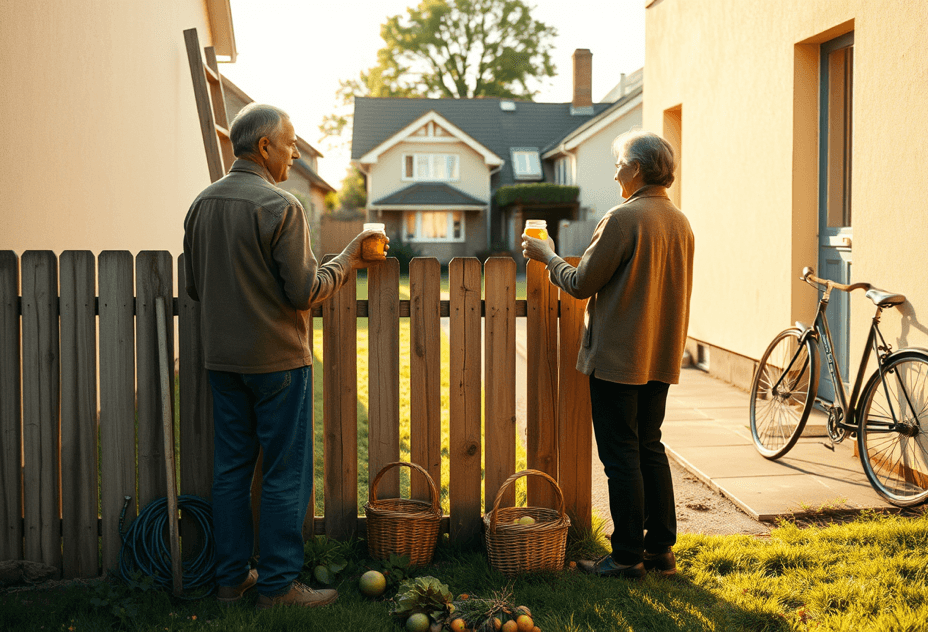
Ask before you need. The worst time to learn whether the neighbour with the generator is the sharing kind is the night you need it. The best time is a Sunday afternoon with nothing at stake. Ask about the generator. Ask how they keep their tomatoes. Ask what they would do if the road flooded. Most people are surprisingly glad to be asked about the things they know, and every one of those conversations is a thread in a net that does not exist yet.
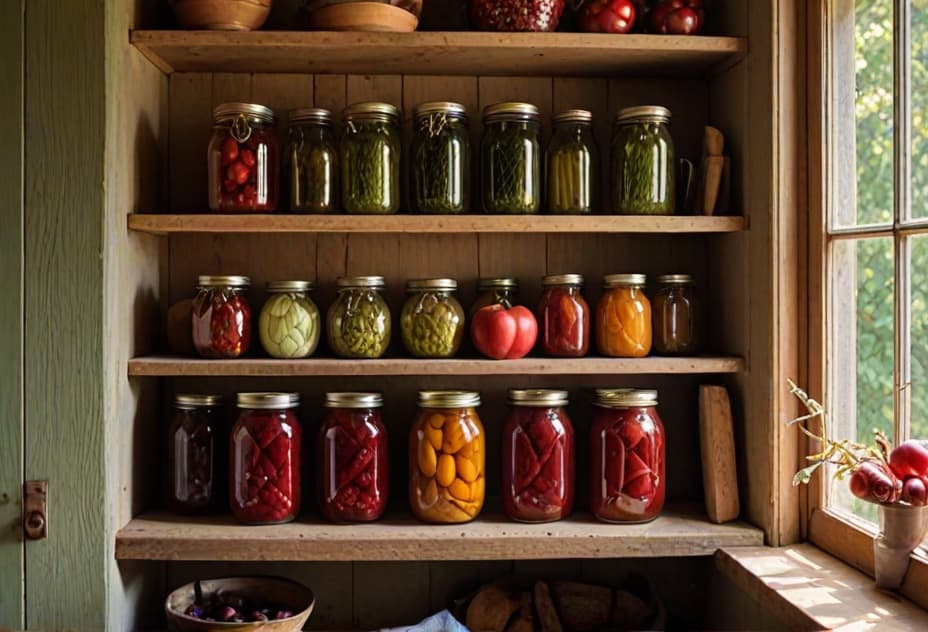
Give something first. A jar of what you preserved. An hour with a ladder. The offer to keep an eye on a house. The economics here are not subtle. A favour given on a calm day is stored trust, the same way a full pantry is stored decision-making. It sits there, costing nothing, until the day it is worth everything.
None of this requires you to like everybody. It requires you to know them. That is a lower bar, and a more useful one.
A note for the people who came to this pillar to get away from people
Some of you are reading this because self-sufficiency was the door out of a world that asked too much of you. Sovereignty was supposed to mean not needing anyone. That instinct is honest and it deserves respect, and the manifesto is careful here: needing support is not a failure of sovereignty. Refusing to seek it is.
The cabin with the door shut is still a cabin somebody else built. The seeds in the drawer were saved by a hundred generations of hands you will never meet. There is no version of self-sufficiency that is not also, underneath, a relationship with other people. The only choice you get is whether those relationships are chosen and known, or accidental and invisible until they fail.
Choosing them is the sovereign move. It always was.
This week
Take a sheet of paper and draw a rough map of your street, or your building, or the two or three closest households if you live somewhere spread out. Then write five names on it, real people within walking distance, and beside each name write one thing you know they can do. If you cannot fill in five, you have just found out something true about your buffer, and it cost you a sheet of paper.
Then pick one of the blanks and fill it this week, by asking. Knock, or catch them at the bins, or send the message you have been meaning to send since you moved in. Tell them one thing you can do. Ask them one thing they can. That is the whole practice.
Grow food. Build community. Learn skills. Take the one you have been avoiding.
Continue Your Sovereignty Journey
Get weekly dispatches on self-sufficiency and the other pillars of sovereignty — or create a free account to access courses, community, and tools.
Don't miss the next one
Weekly articles on self-sufficiency and the other five pillars of sovereignty. No spam. Unsubscribe anytime.
No spam. Unsubscribe anytime. Your data stays yours.